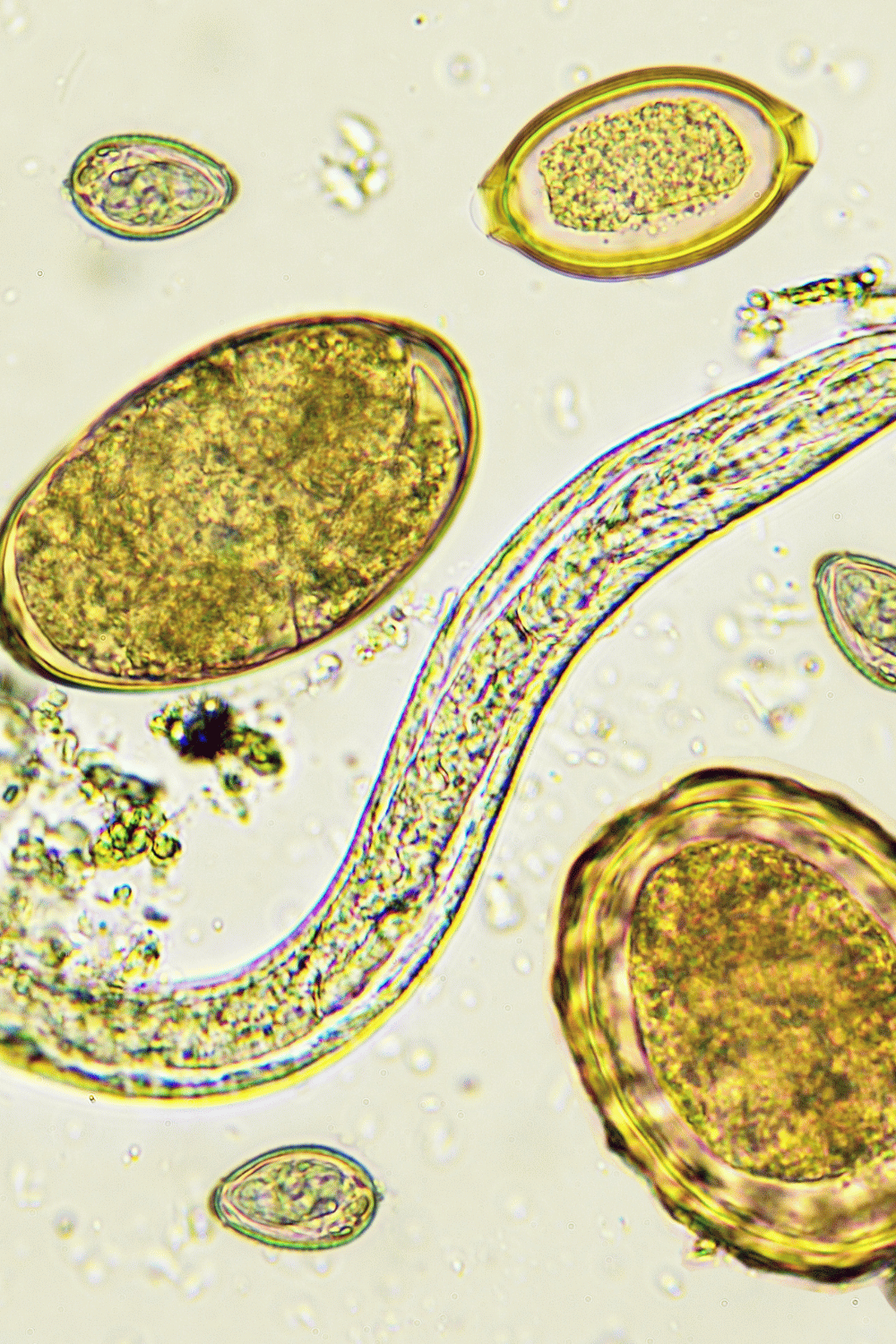
Parasite cleanses are everywhere right now. One side of the internet will tell you that nearly every person has parasites and needs to cleanse regularly. The other side tends to dismiss parasites unless someone has recently traveled internationally or can quite literally see a worm. We don’t agree with either extreme.
After more than 15 years in clinical practice, we have seen situations in which parasites were a meaningful and overlooked piece of someone’s health picture. We’ve also seen people blame parasites for every digestive complaint, skin issue, craving and mood change, when something entirely different needed attention.
So, does everyone need a parasite cleanse? No.
But are parasites worth considering under the right circumstances? Absolutely.
The key is knowing when they reasonably belong on the list of possibilities, and approaching them in a way that supports the entire body rather than simply throwing an aggressive herbal protocol at a collection of vague symptoms.
Parasites Are Not Only a “Travel Problem”
Many people assume parasitic infections occur only after international travel, drinking obviously unsafe water or living somewhere with poor sanitation. Those situations can increase exposure, but they are not the only possibilities.
Parasites may be transmitted through untreated water, contaminated food, inadequately washed produce, undercooked meat or fish, soil, swimming water, bathroom surfaces, childcare environments and close household contact. As you can tell, they’re everywhere – they’re a part of our environment.
Giardia, for example, can spread through contaminated water, food, surfaces or direct contact. Pinworms spread easily among children, caregivers and household members.
This does not mean you should fear normal life, outdoor play or travel. It means parasites are not as rare, or as limited to one type of person, as we sometimes assume.
When Do We Begin to Wonder About Parasites?
We do not arrive at parasites because someone checks one or two boxes on an online symptom list. We become more curious when there is a pattern.
Maybe several family members develop unusual digestive symptoms. Maybe chronic diarrhea begins after camping or travel. Perhaps a child develops intense itching around the anus at night. Maybe someone has persistent digestive problems, nutrient depletion or weight loss that has not been explained by more common causes.
The health history matters.
We would want to know:
- Did symptoms begin after travel?
- Was there exposure to untreated water?
- Did symptoms begin after swimming in a lake, river or pool?
- Is anyone else in the household experiencing similar symptoms?
- Does a child attend daycare or school?
- Is there intense nighttime anal itching?
- Has there been unexplained weight loss?
- Are diarrhea, greasy stools or abdominal pain persisting?
- Is there iron deficiency or another nutrient issue that has not improved as expected?
- Has appropriate testing already been completed?
One vague symptom rarely gives us an answer. The combination of symptoms, timing and possible exposures is much more informative.
Some Symptoms Are More Suggestive Than Others
Parasites can affect digestion, nutrient absorption and immune activity, but the symptoms vary depending on the organism and the number of organisms present.
Symptoms We Take More Seriously
These symptoms are more difficult to dismiss and deserve proper evaluation:
- Persistent diarrhea or loose stools
- Frequent, unexplained nausea or vomiting
- Significant abdominal pain or cramping
- Greasy, foul-smelling or floating stools
- Unexplained weight loss
- Poor weight gain in children
- Intense anal itching at night
- Visible worms or worm-like segments
- Blood in the stool
- Worsening anemia
- Persistent fever during an acute illness
- Signs of dehydration
These symptoms do not automatically confirm a parasite, but they give us a stronger reason to investigate.
The More Subtle Symptoms
Other possible symptoms may include:
- Bloating and excessive gas
- Intermittent constipation or diarrhea
- Fatigue
- Brain fog
- Appetite changes
- Skin itching, rashes or hives
- Sleep disruption
- Unexplained nutrient deficiencies
- Irritability or mood changes
- New digestive sensitivities
These symptoms can be easy to misattribute, but they are also extremely nonspecific.
Fatigue can be connected to iron deficiency, thyroid dysfunction, poor sleep, blood-sugar instability, infection or chronic stress. Bloating may be related to food intolerances, constipation, low stomach acid, microbiome changes or small intestinal bacterial overgrowth. Skin symptoms may have immune, environmental or dietary triggers.
This is why we would never diagnose parasites based on fatigue, cravings, teeth grinding or bloating alone. Those details may belong in the health history, but they need context.
Parasites May Affect More Than Digestion
When we think about intestinal parasites, we naturally think about stomach pain and bowel changes.
But the digestive tract is responsible for breaking down food and absorbing the nutrients the entire body depends on. When that process is disrupted for long enough, the effects may become more widespread.
Some parasites may contribute to:
- Poor nutrient absorption
- Iron-deficiency anemia
- Weakness and fatigue
- Changes in appetite
- Skin or immune reactions
- Poor growth in children
- Lingering microbiome disruption
Hookworms, for example, may contribute to chronic intestinal blood loss and anemia. Giardia can interfere with fat absorption and may cause greasy, floating stools, fatigue and longer-term digestive problems.
This is one reason parasites may be missed when the conversation focuses only on whether someone has diarrhea.
Before Cleansing, Ask Whether Testing Makes Sense
We understand why people are drawn to the idea of simply completing an herbal cleanse “just in case.” Testing is not perfect, appointments can be frustrating, and many people feel that their concerns have already been dismissed.
But parasite protocols are not completely benign.
Botanicals such as wormwood, black walnut, berberine and concentrated oregano are biologically active. They may interact with medications, irritate an already-sensitive digestive tract or be inappropriate during pregnancy, breastfeeding and early childhood.
Whenever possible, identifying the organism allows treatment to be more targeted.
Testing may include:
- Stool ova and parasite examination
- Stool antigen testing
- PCR-based stool testing
- Blood testing for certain organisms
- A morning tape test for suspected pinworms
Parasites and their eggs may not appear in every stool sample. For that reason, the CDC recommends examining three or more stool samples collected on separate days when intestinal parasites are suspected.
Pinworms require a different approach because their eggs are deposited on the skin surrounding the anus. A morning tape test is generally more useful than a standard stool sample.
Testing still needs interpretation. A positive finding does not always explain every symptom, and a single negative stool sample may not tell the entire story.
Our Approach Does Not Begin With “Killing”
When we believe a parasite protocol may be appropriate, we do not begin by reaching for the strongest antiparasitic product available.
We first ask whether the body is prepared to handle the process. If someone is constipated, dehydrated, undernourished and barely sleeping, an aggressive cleanse may leave them feeling significantly worse.
Before beginning, we look at the basics:
- Is the person having regular bowel movements?
- Are they drinking enough water?
- Do they need electrolyte support?
- Are they’re lymphatics moving effectively?
- Are they eating enough protein?
- Is constipation being addressed?
- Are their liver and kidneys functioning appropriately?
- Are they already taking multiple antimicrobial products?
- Are they depleted from chronic diarrhea or poor absorption?
- Is this an appropriate time to add another demand to the body?
Supporting the body may include hydration, electrolytes, regular meals, adequate protein, gentle movement, deep breathing and sufficient sleep.
Some people also incorporate dry brushing, rebounding, sauna or manual lymphatic support. These may encourage circulation and feel helpful, but they are not prerequisites for a successful protocol. They should also be used cautiously when someone is weak, acutely ill or dehydrated.
The goal is not to force the body through an intense reaction. It is to make the process as tolerable and supportive as possible.
Choosing Antiparasitic Support
Treatment should ideally be selected for the suspected or confirmed organism.
In some situations, prescription antiparasitic medication is the most appropriate and effective option. Different organisms respond to different medications, so there is no single product that treats every parasite.
Botanicals are our therapy of choice, when appropriate, with traditional antiparasitic or antimicrobial uses, including:
- Black walnut
- Clove
- Wormwood
- Sweet wormwood
- Neem
- Oregano
- Thyme
- Garlic
- Ginger
- Berberine-containing plants
- Andrographis
Many of these plants contain compounds that have demonstrated antiparasitic activity in laboratory or animal research.
“Natural” does not mean appropriate for everyone.
Wormwood and black walnut, for example, may not be suitable during pregnancy or breastfeeding, and concentrated herbal combinations require additional caution in children, people taking medications and anyone with liver or neurological concerns.
One option we use regularly is Para-Shield, an herbal liquid formulated with botanicals such as black walnut, clove, ginger, barberry, wormwood and oregano. It is marketed for adults and children ages three and older with different suggested serving amounts. We’ve found it to be very gentle, easy to use, and effective.
Where Binders May Fit
Binders are often paired with integrative cleansing protocols to capture certain compounds within the digestive tract and help carry them out through the stool.
Common binder ingredients include:
- Activated charcoal
- Bentonite clay
- Zeolite
- Chitosan
- Modified citrus pectin
You may hear this described as “mopping up” what is released during a cleanse.
While binders may be useful in selected protocols, they do not kill parasites. They may also bind medications, supplements and nutrients. Timing matters, and binders generally need to be separated from other products according to professional or manufacturer instructions.
They may also worsen constipation. If someone is not having regular bowel movements, adding a binder can be counterproductive.
Products we may consider depending on the individual include:
- Ultra Binder
- Pure Body
- Binder Plus
The best choice depends on what else the person is taking, bowel regularity, tolerance and the goal of the protocol.
What About the Full Moon?
We know this is one of the most talked-about (and controversial) parts of parasite cleansing.
Some people report increased bloating, sleep changes, cravings, irritability or digestive symptoms around a full moon. Certain traditional and integrative protocols therefore begin or intensify antiparasitic support during that time.
While we do think there is some validity to this, at this point, research has not established that parasites reliably become more active, reproduce more or respond better to treatment during a full moon.
That does not mean someone’s reported symptoms are imaginary. Sleep and other biological rhythms may shift throughout the month, and a monthly schedule can provide a consistent structure for a protocol. But we would not use the full moon alone as evidence that someone has parasites or to establish a strict cleanse routine.
If a person and their provider decide to use the lunar cycle as a timing tool, the fundamentals still matter more: selecting an appropriate protocol, maintaining hydration, supporting bowel movements and paying attention to how the body responds.
Can Food Help?
Certain foods have a long history of use in traditional parasite-supportive diets:
- Pumpkin seeds
- Papaya
- Garlic
- Onion
- Ginger
- Pomegranate
- Clove
- Oregano
- Bitter melon
- Grapefruit
- Walnuts
- Fermented foods
These foods contain various plant compounds, fibers and nutrients that support immune function, digestion and microbial balance.
We do not consider food alone a reliable treatment for a confirmed parasitic infection.
Eating pumpkin seeds or garlic may be a nourishing addition to someone’s diet, but it should not delay appropriate testing or treatment when symptoms are persistent or severe.
During active diarrhea or nausea, tolerance comes first. Large amounts of raw fiber, fermented foods or intense herbs may make someone feel worse. Hydration, electrolytes and easily tolerated foods may be more appropriate until the acute symptoms settle.
Rebuilding Matters, Too
The protocol should not end the moment the antiparasitic product does.
Parasitic infections, and sometimes the products used to address them, may disrupt digestion and the intestinal microbiome. Afterward, someone may still need support with:
- Regular bowel movements
- Digestive function
- Nutrient repletion
- Adequate protein
- Hydration and electrolytes
- Prebiotic foods
- Fermented foods
- A carefully selected probiotic
- Sleep and nervous-system regulation
If iron, B12 or another nutrient has been depleted, those levels may need to be evaluated and replenished appropriately. A person may also need to be retested if symptoms persist. Continuing to add stronger products without confirming whether an infection remains can create more confusion.
Do Not Forget About Reinfection
One of the most frustrating parts of parasites – especially pinworms – is reinfection. No supplement can compensate for repeatedly being exposed again.
Practical prevention may include:
- Thorough handwashing with soap and water
- Keeping fingernails short
- Discouraging nail biting
- Washing bedding, pajamas, underwear and towels
- Cleaning frequently touched bathroom surfaces
- Avoiding shared towels
- Washing produce
- Avoiding untreated water
- Following guidance about treating other household members
With pinworm infections, for example, it’s often recommended that infected individuals, caregivers and household members are often treated at the same time to help interrupt the cycle.
When a DIY Cleanse Is Not the Best Choice
Please work with a qualified provider rather than beginning a self-directed cleanse if you or your child has:
- Blood in the stool
- Persistent fever
- Severe abdominal pain
- Ongoing vomiting or diarrhea
- Signs of dehydration
- Unexplained weight loss
- Poor growth
- Significant anemia
- A weakened immune system
- Recent international travel followed by illness
- Pregnancy or breastfeeding
- A suspected infection in a baby or very young child
These situations may require organism-specific testing, prescription medication or evaluation for something other than parasites.
So, Do You Need a Parasite Cleanse?
Maybe.
Parasites deserve neither automatic dismissal nor automatic blame. A thoughtful approach looks for patterns, considers possible exposures, tests when appropriate and supports the body before, during and after treatment.
Most importantly, it recognizes that a parasite protocol should be individualized. The right approach for one person may be completely wrong for another.
If you suspect parasites, consider working with an integrative, functional or naturopathic provider who will look at your entire health history and help determine whether testing, prescription treatment, herbal support – or no cleanse at all – makes the most sense.
This is not about cleansing because it is trendy. It is about using the right tools when there is a genuine reason to believe parasites may be part of the story.
Sources
- Centers for Disease Control and Prevention. “Parasites: Testing and Diagnosis.”
- Centers for Disease Control and Prevention. “About Giardia Infection.”
- Centers for Disease Control and Prevention. “Symptoms of Giardia Infection.”
- Centers for Disease Control and Prevention. “Preventing Pinworm Infection.”
- World Health Organization. “Soil-Transmitted Helminth Infections.”
- Ranasinghe, S., et al. “Medicinal Plants as a Source of Antiparasitics.” Parasitology Research, 2023.
- Strothmann, A. L., et al. “Antiparasitic Treatment Using Herbs and Spices: A Review of the Literature.” Pathogens, 2022.