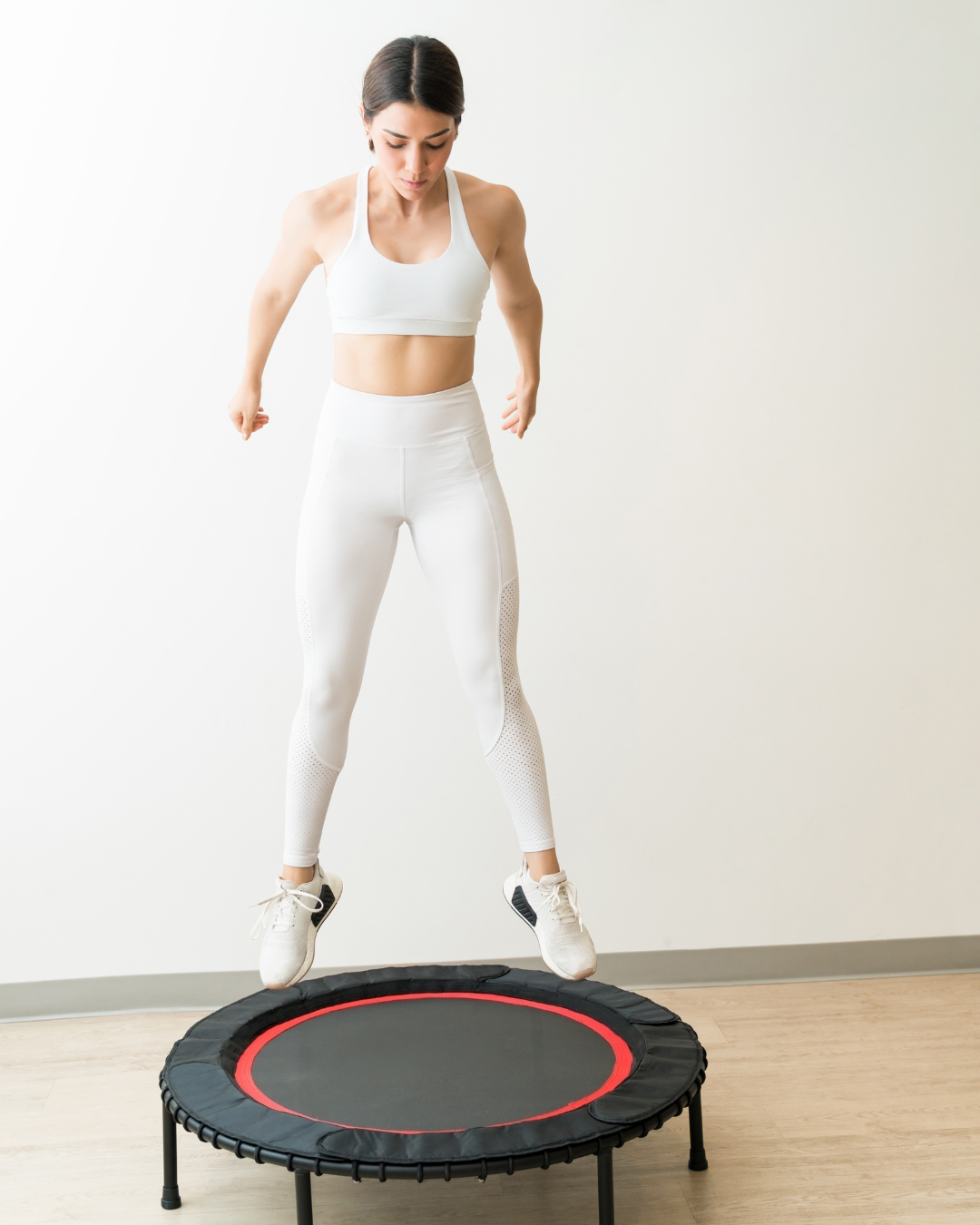
Rebounding may look like simple bouncing on a mini trampoline, but science tells a much deeper story.
This gentle, rhythmic movement has become one of the most powerful tools in holistic wellness. And it isn’t just natural health practitioners who say so. Research conducted by NASA revealed that rebounding is one of the most efficient and effective forms of exercise for the human body! Amazing, huh?!
Originally studied as a way to help astronauts rebuild bone and muscle mass after time in zero gravity, the NASA rebounding study uncovered remarkable benefits for circulation, oxygenation, bone density, and joint protection.
Let’s explore why rebounding is often called one of the best low-impact exercises for whole-body health.
Rebounding Supports Lymphatic Drainage & Detoxification
One of the most well-known rebounding benefits is lymphatic stimulation.
Unlike the cardiovascular system, the lymphatic system does not have a central pump. It depends on movement and gravitational shifts to circulate lymph fluid and remove metabolic waste.
Rebounding creates a unique acceleration and deceleration effect, sometimes referred to as a gentle “G-force” cycle. According to NASA’s findings, this alternating state of weightlessness and increased gravitational load enhances circulation and cellular cleansing.
This gentle “G-force” cycle can support improved lymphatic drainage, reduced fluid retention, enhanced immune resilience, and support for inflammatory balance.
For those seeking natural detox support, a mini trampoline session may be one of the most efficient ways to stimulate lymph flow safely!
Enhances Cellular Oxygenation & Energy Production
The NASA rebounding study found that jumping on a trampoline produced greater biomechanical stimulation with lower oxygen expenditure compared to treadmill running.
In practical terms? You receive more benefit with less strain!
Improved oxygen delivery supports cellular energy production (ATP synthesis), mental clarity and focus, mitochondrial health, and sustainable vitality.
Because rebounding distributes force evenly throughout the body, it allows for cardiovascular conditioning without excessive stress on joints and connective tissue. This makes it an ideal low-impact cardio option for long-term wellness.
A Powerful Low-Impact Exercise That Protects the Joints
One of the most remarkable discoveries from NASA research was that rebounding generated greater G-forces with less orthopedic stress than running.
When bouncing on a rebounder, the mat absorbs a significant amount of shock. Instead of force traveling upward into the ankles, knees, hips, and spine, it is distributed more evenly across the musculoskeletal system.
This makes rebounding gentle on sensitive joints, supportive for muscle toning, beneficial for connective tissue strength, and ideal for sustainable, long-term movement. For those recovering from injury, navigating joint issues, or seeking effective low-impact exercise, rebounding offers strength without strain.
Rebounding for Bone Density Support
Astronauts can lose significant bone mass in microgravity. NASA explored rebounding as a countermeasure because alternating G-forces stimulate osteoblastic activity (the cells responsible for building bone).
On Earth, this same mechanism can support bone density maintenance, prevention of age-related bone loss, increase structural resilience, and even hormonal transition support for women.
Weight-bearing movement is essential for skeletal health, and rebounding offers a gentle yet effective way to stimulate bone tissue without harsh impact.
System Regulation & Emotional Balance
Beyond its physical benefits, rebounding also supports the nervous system.
The rhythmic vertical motion stimulates the vestibular system (located in the inner ear), which communicates directly with the brain and influences balance, coordination, and emotional regulation.
Regular rebounding may help improve balance and coordination, reduce stress response, support parasympathetic activation, and promote emotional lightness.
Many people report feeling clearer, calmer, and more energized after just 5–10 minutes of gentle bouncing. (And we would agree!)
Nervous system regulation is foundational – rebounding provides a fun and surprisingly joyful way to support the nervous system.
Efficient, Accessible & Time-Saving
Busy lives can demand efficiency, and this is another area where rebounding shines. Research has suggested that 10 minutes of rebounding could provide cardiovascular benefits comparable to 30 minutes of running, with significantly less joint stress. Wow, that’s significant!
Rebounding can be done at home, in short sessions, without complicated equipment, and at nearly any fitness level and age! A rebounding session can fits seamlessly into busy schedules while still delivering profound physiological benefits. Perfect for busy moms and families!
How to Start Rebounding for Health Benefits
If you’re new to rebounding, begin gently.
- Start with 5 minutes/day
- Keep your feet in contact with the mat, lifting only the heels (a gentle “health bounce”)
- Maintain relaxed, steady breathing
- Gradually increase to 15–20 minutes
Consistency matters more than intensity. Daily lymphatic stimulation yields far greater benefit than occasional vigorous sessions.
Our Perspective
We believe wellness is about supporting the body’s innate intelligence, not forcing it.
Rebounding works with gravity, circulation, and natural physiological rhythms. It supports detoxification, oxygenation, bone strength, and nervous system balance in a way that feels intuitive and sustainable.
The research from NASA simply confirms what holistic traditions have long understood: the body thrives on rhythmic, gentle stimulation.
Rebounding isn’t just a mini trampoline workout. It’s…
-lymphatic drainage.
-low-impact strength training.
-bone density support.
-nervous system nourishment.
-joyful medicine.
And sometimes, healing really can feel this light.
Here’s a link to our favorite rebounder, used by everyone in our households. Happy rebounding!
Sources
Bhattacharya, A., McCutcheon, E. P., Shvartz, E., & Greenleaf, J. E. (1980). Body acceleration distribution and O₂ uptake in humans during running and jumping. Journal of Applied Physiology, 49(5), 881–887.
(Research conducted at NASA Ames Research Center.)
Greenleaf, J. E. (1984). Exercise countermeasures for space flight. Acta Astronautica, 12(2), 119–129.
National Aeronautics and Space Administration (NASA). (1980). Acceleration, deceleration, and forces on the body during jumping on a trampoline. NASA Ames Research Center Technical Report.