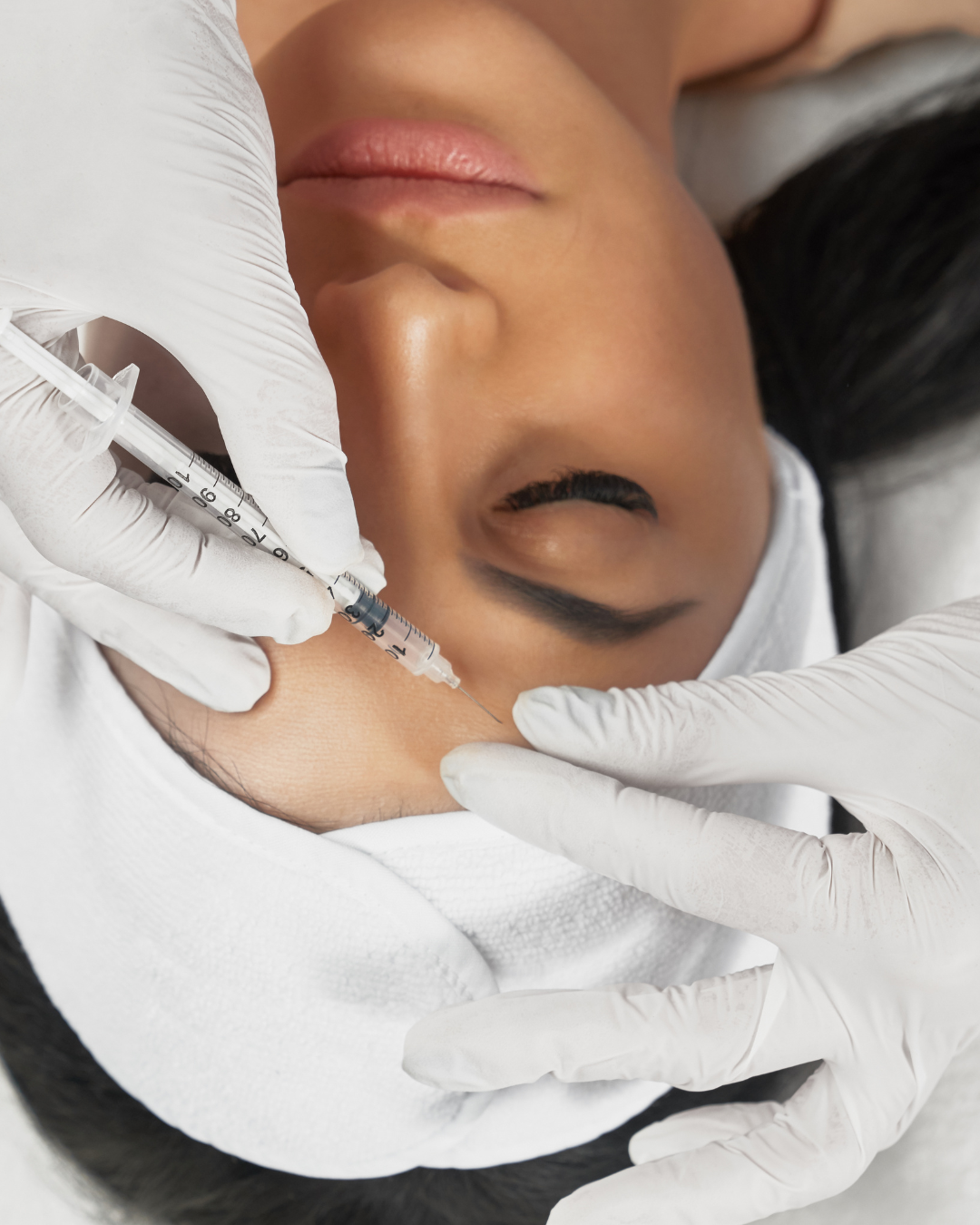
In a culture that fears aging, Botox has become almost routine. Marketed as quick, preventative, and harmless, it’s often described as a simple beauty treatment.
But Botox is not skincare.
It is a purified neurotoxin derived from Clostridium botulinum (one of the most potent toxins known) temporarily paralyzing facial muscles to reduce the appearance of wrinkles.
While it can soften lines in the short term, there are real risks to consider. And more times than not, women are not being properly informed of them prior to the injections. We believe in informed, empowered choices.
Let’s explore what the science says about Botox and the natural alternatives that support skin health, collagen production, and graceful aging without disrupting the body’s intelligence…and potentially life-altering side effects.
What Is Botox, Really?
Botox is the trade name for botulinum toxin type A, manufactured by Allergan (now part of AbbVie).
It works by blocking acetylcholine release at the neuromuscular junction, preventing muscle contraction. When facial muscles cannot contract, wrinkles temporarily soften.
The effects typically last 3–4 months.
But the mechanism, muscle paralysis, is important to understand when evaluating long-term impact.
Evidence-Based Risks and Concerns of Botox
Botox is FDA-approved and widely used. However, approval does not mean risk-free.
The U.S. Food and Drug Administration (FDA) has required a boxed warning (its strongest warning label) due to the potential for toxin spread beyond the injection site.
1. Toxin Spread Beyond Injection Site
The U.S. Food and Drug Administration (FDA) warns that botulinum toxin effects may spread from the injection area, potentially causing:
- Muscle weakness
- Difficulty swallowing
- Breathing complications
- Vision disturbances
- Ptosis (drooping eyelids)
(Source: FDA Drug Safety Communication, 2009; updated labeling requirements)
These complications DO occur, and can quickly following injection.
2. Muscle Atrophy & Facial Changes Over Time
Botox works by immobilizing muscle. With repeated use, inactive muscles may weaken and shrink (atrophy).
A 2016 review in JAMA Facial Plastic Surgery noted that long-term chemodenervation can alter facial muscle balance and potentially impact expression dynamics.
Over time, this may contribute to flattened facial contours, compensatory wrinkling in untreated areas, and changes in natural expression patterns. Facial aging is not only about skin, it is also about bone structure, fascia, fat pads, and muscle tone.
Paralyzing muscle may reduce movement lines, but it does not support structural integrity.
3. Neurological & Systemic Concerns
Botulinum toxin is a neurotoxin. While cosmetic doses are low, research has explored whether repeated exposure may have subtle systemic effects.
A 2015 review published in Toxins examined potential distant spread of botulinum toxin and suggested that systemic diffusion is biologically plausible.
As a result, some people have reported side effects like headaches, flu-like symptoms, fatigue, and mood changes.
4. Emotional Expression & Psychological Impact
Facial muscles are not just cosmetic – they are neurologically connected to emotional processing. Interestingly, research on the facial feedback hypothesis suggests that limiting facial movement may influence emotional experience. A 2014 study in Psychological Science found that Botox may dampen emotional intensity due to reduced facial feedback signaling.
Our faces are not separate from our nervous systems. They are deeply connected. One must wonder how much of an impact Botox can have on social-emotional health!
Natural Alternatives to Botox for Wrinkle Prevention & Skin Support
Aging is not something to fight – it’s something to support.
Here are holistic alternatives that encourage collagen production, fascia health, circulation, nervous system balance and WORK!
1. Frownies (Facial Taping)
Frownies facial patches mechanically retrain facial muscles and prevent habitual creasing during sleep. We like this brand because they are unbleached, latex, silicone, and paraben free.
While large-scale clinical trials are limited, dermatologists acknowledge that wrinkle formation is heavily influenced by repetitive movement. Mechanical interruption of nighttime frowning may reduce line depth over time, without paralysis!
2. Gua Sha & Facial Massage
Traditional Chinese Medicine practices such as gua sha improve microcirculation and lymphatic flow.
A 2018 study in Complementary Therapies in Medicine found that gua sha increased surface microcirculation by up to 400% in treated areas – that’s amazing!
Benefits can include improved lymphatic drainage, reduced puffiness, enhanced collagen support, and fascia mobility. Healthy fascia supports youthful facial contour.
We prefer a stainless steel gua sha tool. We’ve dropped and broken too many to count – whoops!
3. Red Light Therapy
Red and near-infrared light therapy (aka photobiomodulation) has been studied for collagen stimulation.
A 2014 study in Photomedicine and Laser Surgery found that red light therapy improved skin complexion and collagen density after regular treatment. Research has linked red light therapy use to increased fibroblast activity (fibroblasts help form connective tissue), enhance collagen production, reduce fine lines and improve skin elasticity.
Unlike Botox, this approach supports cellular regeneration rather than blocking muscle function.
Red light therapy devices are NOT created equal. We use and trust both Lumebox and Fringe red light products. The Fringe face mask is handy if your primary goal in using red light is for facial aging support.
4. Bone Broth Protein & Collagen Support
Collagen loss accelerates with age.
Supplementing with hydrolyzed collagen or bone broth protein provides amino acids (glycine, proline, hydroxyproline) needed for skin structure. A 2019 systematic review in Journal of Drugs in Dermatology found that oral collagen supplementation improved skin elasticity and hydration.
True anti-aging begins internally. Two products we use regularly are Paleovalley’s Bone Broth Protein and Needed’s Collagen Protein. We use Needed’s unflavored powder and mix into coffee, while both brands also work well to incorporate into baked goods, soups, stews or smoothies – just depends on the flavor profile you’re going for.
5. Acupuncture for Facial Rejuvenation
Facial acupuncture, rooted in Traditional Chinese Medicine, increases circulation and may stimulate collagen production.
A small 2013 clinical study published in Evidence-Based Complementary and Alternative Medicine reported improvements in skin elasticity and facial muscle tone after cosmetic acupuncture treatments. It supports muscle tone rather than weakening it.
6. Facial Cupping
Facial cupping gently increases blood flow and stimulates connective tissue. Improved circulation supports oxygen delivery, nutrient exchange, lymphatic movement, and collagen activity.
When done correctly, it can reduce stagnation without aggressive pulling. It’s both inexpensive and effective! We prefer to use silicone or glass tools.
7. Additional Natural Strategies for Aging Gracefully
Additional strategies to use for wrinkle prevention includes:
- Daily mineral-rich hydration, using quality electrolytes like Fringe or Just Ingredients
- Strength training (supports facial bone density via systemic effects)
- Adequate protein intake
- Vitamin C for collagen synthesis
- Stress reduction (chronic cortisol accelerates collagen breakdown)
- Consistent sleep
Skin reflects systemic health.
A Holistic Perspective on Aging
At Kale Blossom, we believe aging is not something to freeze – it is something to nourish.
Wrinkles are not simply lines.
They are stories.
They are expressions.
They are evidence of a life fully felt.
The question is not how to erase time. It is how to support the body so it ages with vitality, strength, and radiance – from the inside out.
Sources
Alam, M., & Dover, J. S. (2016). OnabotulinumtoxinA for facial wrinkles: Long-term safety and efficacy. JAMA Facial Plastic Surgery, 18(1), 1–3.
Benedetto, A. V. (2015). Botulinum toxins in clinical aesthetic practice. Clinical, Cosmetic and Investigational Dermatology, 8, 401–407.
Brin, M. F., James, C., & Maltman, J. (2014). Botulinum toxin type A products are not interchangeable: A review of the evidence. Biologics: Targets and Therapy, 8, 227–241.
Carruthers, J., Carruthers, A., & Humphrey, S. (2015). Botulinum toxin type A: Overview of clinical use. Dermatologic Surgery, 41(Suppl 1), S27–S37.
Hexsel, D., Dal’Forno, T., & Hexsel, C. (2013). A randomized pilot study evaluating acupuncture for facial rejuvenation. Evidence-Based Complementary and Alternative Medicine, 2013, 1–6.
Huang, Y. Y., Chen, A. C., Carroll, J. D., & Hamblin, M. R. (2014). Biphasic dose response in low level light therapy. Photomedicine and Laser Surgery, 27(4), 215–217.
National Institutes of Health. (2018). Botulinum toxin. U.S. National Library of Medicine, MedlinePlus.
U.S. Food and Drug Administration. (2009). FDA requires boxed warning for all botulinum toxin products. FDA Drug Safety Communication.
Zdzieblik, D., Oesser, S., Gollhofer, A., & König, D. (2015). Collagen peptide supplementation improves skin elasticity: A randomized controlled trial. Journal of Medical Nutrition & Nutraceuticals, 4(1), 47–52.